
The Practical Runner’s Guide: Training, Fueling, Recovery and Running Smarter
Understanding different workouts, training intensity, hydration, nutrition, strength training and recovery can help you become a more consistent runner.
Running is simple. You put on your shoes and start moving.
But improving as a runner requires a little more understanding.
Many runners believe that progress comes from running faster, increasing mileage or pushing harder every week. While challenging workouts have their place, endurance development depends on a combination of training stimuli, recovery and consistency.
After more than two decades of running, one of the most important lessons I’ve learned is that not every run should be hard, and not every workout should be about pace.
Whether you’re preparing for your first 5K, a half marathon, a marathon or simply trying to run more comfortably, understanding a few basic principles can make your training more effective and sustainable.
Here is a practical guide to help you make better decisions.
1. Understand the Purpose of Each Workout
Different types of running workouts produce different physiological demands.
A balanced training program uses a combination of these sessions rather than repeating the same intensity every day.
Easy Runs: Building Your Aerobic Foundation
Easy runs are performed at a comfortable intensity, usually allowing you to maintain a conversation without significant difficulty.
They play a fundamental role in endurance training.
Regular low-intensity running supports adaptations such as increased mitochondrial content and function, improved capillary supply in trained muscles and enhanced aerobic metabolism.
These adaptations help your body sustain exercise more efficiently over time.
Easy running also allows you to accumulate training volume without the same physiological stress associated with frequent high-intensity sessions.
Practical tip: If your easy run feels like a race, you’re probably running too hard for the intended purpose.
Slowing down is not a sign of poor fitness. Sometimes, it’s exactly what your training needs.
Long Runs: Developing Endurance
Long runs are designed to progressively increase your ability to sustain running for extended periods.
They challenge your cardiovascular system, muscular endurance, energy availability and psychological tolerance for prolonged exercise.
For marathon runners, long runs also provide opportunities to practice hydration, carbohydrate intake, pacing and race-day equipment.
However, a long run doesn’t always need to be fast.
Most long runs should be controlled according to the athlete’s training level and the objective of the session.
Some experienced runners may include sections at marathon pace or other prescribed intensities, but these sessions require appropriate preparation and recovery.
Practical tip: The goal is to finish the workout having achieved its intended training stimulus, not simply to finish exhausted.
Interval Training: Developing Specific Physical Capacities
Interval training alternates periods of higher-intensity running with recovery periods.
For example:
- 8 × 400 meters with recovery between repetitions.
- 5 × 1,000 meters at a prescribed intensity.
- 10 × 1 minute fast, followed by 1 minute easy.
The physiological response depends on the intensity, duration and recovery structure.
Different interval sessions can target aerobic power, speed, running economy or the ability to sustain demanding efforts.
Not all interval training is maximal-intensity training.
Practical tip: The purpose of intervals is to accumulate quality work at a specific intensity, not to run every repetition as fast as possible.
Fartlek: Playing With Speed
The word fartlek comes from Swedish and means “speed play.”
Fartlek training involves changes in running speed or intensity, often with a more flexible structure than traditional intervals.
For example:
Run comfortably for 10 minutes, then alternate 2 minutes at a faster effort with 3 minutes easy, repeating the sequence several times.
Another option is to increase your pace between landmarks such as trees or street corners.
Fartlek can be useful for introducing faster running without focusing excessively on exact pace.
It can also make training more enjoyable.
Practical tip: Use perceived effort to control intensity instead of constantly checking your watch.
Tempo and Threshold Runs: Learning to Sustain Effort
Tempo runs are generally sustained efforts performed at a comfortably hard intensity, although the term is used differently across training systems.
Threshold-oriented sessions are often designed around intensities near an athlete’s lactate threshold.
These workouts can help develop the ability to sustain relatively demanding efforts.
Examples include a continuous 20-minute effort or several shorter repetitions with controlled recovery.
The appropriate pace depends on the athlete’s current fitness and the specific purpose of the workout.
Practical tip: A tempo run should feel controlled and demanding, not like an all-out race.
Recovery Runs: Supporting Training Continuity
Recovery runs are short, low-intensity sessions typically performed between more demanding workouts.
Their purpose is to maintain light activity while limiting additional training stress.
However, running is not always the best recovery strategy.
After particularly demanding sessions, some athletes may benefit more from rest, walking or other low-impact activities.
Remember: Recovery is not something you earn by training hard. It is part of the training process.
2. Learn to Use RPE: Rate of Perceived Exertion
One of the most useful tools for runners is also one of the simplest.
Rate of Perceived Exertion, or RPE, describes how difficult an exercise feels.
You don’t need an expensive watch to use it.
A practical 1-to-10 scale can help guide your training:
| RPE | Perceived Effort | Running Application |
| 1–2 | Very easy | Walking, warm-up or very light recovery |
| 3–4 | Easy | Comfortable conversational running |
| 5–6 | Moderate | Steady running with more noticeable breathing |
| 7–8 | Hard | Tempo or demanding interval efforts |
| 9–10 | Very hard to maximal | Short, high-intensity efforts |
These categories are approximate. RPE is subjective, and the intensity associated with each value varies between athletes and workout types.
The advantage of RPE is that it helps you adjust training according to how your body responds.
For example, a pace that normally feels easy may become significantly harder in hot, humid weather.
Rather than forcing your usual speed, you can adjust your pace to preserve the intended effort.
Your body doesn’t know the pace displayed on your watch. It responds to the physiological demands of the exercise.
3. Hydration, Electrolytes and Carbohydrates: Fueling Your Runs
Nutrition and hydration become increasingly important as running duration and environmental stress increase.
However, there is no universal hydration or fueling strategy that works for every athlete.
Hydration: Drink According to Your Needs
During exercise, sweating helps regulate body temperature.
Fluid losses vary according to body size, exercise intensity, duration, temperature, humidity, acclimatization and individual sweat rate.
For shorter runs in comfortable conditions, drinking according to thirst may be sufficient for many healthy runners.
During prolonged exercise, especially in the heat, planning fluid availability becomes more important.
A practical way to estimate sweat loss is to compare body mass before and after a representative training session while accounting for fluids consumed and urine produced.
One kilogram of body mass lost corresponds approximately to one liter of net fluid loss, although changes in body mass do not represent sweat loss perfectly.
The goal is not necessarily to replace every drop of sweat during exercise.
Avoid both excessive dehydration and overdrinking.
Drinking more fluid than your body can appropriately handle can contribute to exercise-associated hyponatremia, a potentially dangerous reduction in blood sodium concentration.
Electrolytes: Why Sodium Matters
Sweat contains water and electrolytes, particularly sodium and chloride.
Sodium helps regulate fluid balance and supports normal nerve and muscle function.
For longer sessions, particularly in hot conditions or among athletes with high sweat and sodium losses, sodium intake may be useful.
However, electrolyte needs vary substantially.
A runner completing an easy 30-minute session does not necessarily need an electrolyte supplement.
A marathon runner exercising for several hours in South Florida may have very different requirements.
Also, taking electrolytes does not eliminate the risks associated with excessive fluid intake or heat illness.
Carbohydrates: Fueling Endurance Performance
Carbohydrates provide an important energy source during moderate- and high-intensity exercise.
As running duration increases, carbohydrate availability can become a limiting factor.
General practical guidance:
| Exercise Duration | Carbohydrate Strategy |
| Under 60 minutes | Usually no carbohydrate intake required during exercise |
| 60–90 minutes | May be useful depending on intensity and preparation |
| 1–2.5 hours | Approximately 30–60 g/hour for prolonged endurance exercise |
| Over 2.5 hours | Up to approximately 90 g/hour may benefit trained athletes using appropriate carbohydrate combinations |
These are general ranges, not mandatory targets.
Individual needs depend on intensity, prior meals, gastrointestinal tolerance and training goals.
Higher carbohydrate intakes require practice and may not be appropriate for everyone.
Practical tip: Practice your fueling strategy during long training sessions. Race day should not be your first experiment with a new gel or sports drink.
4. Heat, Humidity and Dew Point: Running in South Florida
Running in Boca Raton presents a particular challenge.
High temperatures and humidity can substantially increase physiological strain.
Your body produces heat during exercise, and sweating is one of its primary cooling mechanisms.
However, sweat must evaporate to provide effective cooling.
When the air contains substantial moisture, evaporation becomes less effective.
This can contribute to higher cardiovascular strain, increased perceived effort and reduced performance at a given pace.
Why Dew Point Matters
Dew point is the temperature at which air becomes saturated with water vapor when cooled without changing its moisture content.
A higher dew point indicates greater atmospheric moisture.
For runners, it provides useful information about conditions that may limit evaporative cooling.
A dew point above approximately 70°F (21°C) generally indicates very humid conditions, although actual heat stress also depends on air temperature, sunlight, wind and exercise intensity.
Even early morning runs can be demanding when dew points remain elevated.
Practical Recommendations
- Check temperature and dew point before running.
- Consider sunlight, wind and overall heat stress, not humidity alone.
- Reduce pace when necessary to maintain the intended effort.
- Allow time for gradual heat acclimatization.
- Plan hydration according to expected conditions and individual needs.
- Recognize warning signs such as dizziness, confusion, severe weakness or unusual symptoms.
Heat stroke is a medical emergency. Suspected cases require immediate emergency assistance and rapid cooling.
Remember: A slower pace in difficult weather doesn’t automatically mean you’ve lost fitness.
Sometimes, the environment is simply making the same workload more demanding.
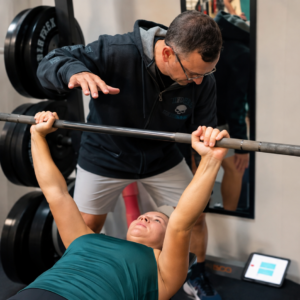
5. Strength Training: An Essential Part of Running Development
Running improves your ability to run.
But running alone does not necessarily develop every physical quality that may support endurance performance.
Strength training can improve muscular strength, neuromuscular function and, depending on the program and athlete, running economy.
Running economy refers to the metabolic or oxygen cost of running at a given speed.
An athlete with better running economy generally requires less energy to maintain the same submaximal pace.
Research suggests that appropriately designed resistance training, including heavy resistance and certain plyometric methods, can improve running economy in endurance runners.
However, results vary according to training experience, exercise selection, program duration and individual characteristics.
What Should Runners Strengthen?
A well-designed program may include:
Lower-body strength: Squats, split squats, lunges and deadlift variations.
Calf and ankle capacity: Calf raises, soleus-focused exercises and progressive loading of the lower leg.
Hip and trunk strength: Exercises targeting force production, control and coordination.
Single-leg movements: Step-ups, single-leg hinges and other unilateral exercises.
Plyometrics: Jumps, hops and landing exercises when appropriate for the athlete’s experience and physical capacity.
There is no single exercise that every runner must perform.
Training should be adapted to the runner’s goals, injury history, current capacity and overall workload.
For many runners, two appropriately planned strength sessions per week can be a practical starting point.
Strength training should complement running, not leave you too fatigued to complete your most important running sessions.
6. Choosing Running Shoes: Comfort Before Marketing
Running shoe technology has evolved considerably.
Carbon plates, advanced foams, different geometries and cushioning systems can influence running mechanics and performance.
Some modern racing shoes have demonstrated measurable improvements in running economy under specific conditions.
But that does not mean the most technologically advanced or expensive shoe is automatically the best choice for every runner.
For everyday training, comfort, fit and individual response deserve substantial attention.
A shoe that works well for one runner may feel uncomfortable or unsuitable for another.
Rather than choosing shoes exclusively based on marketing claims, consider:
- Comfort during running
- Appropriate fit and available space for the toes
- How the shoe feels at your usual training pace
- Your previous experience with similar footwear
- The intended purpose, such as daily training or racing
Never Test New Shoes for the First Time on a Long Run
This is one of the simplest recommendations I give runners.
Start with a short, comfortable run.
Pay attention to pressure points, rubbing, discomfort and how your body responds.
If the shoe feels good, gradually test it over longer distances.
A shoe that feels comfortable while walking around a store may behave differently after 15 miles of running.
The best running shoe is not necessarily the one with the most technology. It’s one that fits your needs and feels comfortable during the running you actually do.
Comfort is an important selection criterion, although no shoe can guarantee injury prevention.
7. Progression: Why More Is Not Always Better
One of the most common mistakes among runners is increasing training demands too quickly.
This may involve adding mileage, increasing intensity, introducing more interval sessions or combining several demanding workouts without sufficient recovery.
Training adaptation requires an appropriate stimulus followed by time to respond.
There is no universal weekly mileage increase that guarantees safety.
The popular 10% rule can be a rough reference for some runners, but it should not be treated as a scientifically established injury-prevention threshold.
Instead, consider your recent training history, current fitness, recovery and response to previous sessions.
Avoid changing too many variables simultaneously.
For example, increasing weekly mileage while adding intense intervals and heavy strength training may create more total stress than expected.
Consistency over months matters more than one impressive workout.
8. Recovery: The Training You Don’t See
Recovery is not limited to stretching or using recovery devices.
Sleep, adequate nutrition, appropriate training distribution and sufficient time between demanding sessions are fundamental.
Some practical considerations:
Sleep: Most adults need approximately 7–9 hours per night, although individual needs vary.
Nutrition: Adequate energy and protein intake support tissue repair and adaptation.
Training distribution: Avoid making every session a hard session.
Monitoring: Pay attention to persistent fatigue, unusual soreness, declining performance and changes in motivation.
Rest: Sometimes the most productive training decision is not to run.
Wearables may provide additional information through resting heart rate, sleep estimates and heart rate variability (HRV).
But no single number can fully determine recovery or readiness.
Use these metrics alongside how you feel and how you perform.
9. The Most Important Principle: Understand Your Training
You don’t need to become an exercise physiologist to become a better runner.
But understanding the purpose of your workouts can change how you approach training.
Easy runs develop aerobic capacity.
Intervals introduce specific intensity demands.
Long runs build endurance and provide opportunities to practice fueling.
Strength training develops physical capacities that running alone may not fully address.
Hydration and nutrition help support prolonged exercise.
Recovery allows you to tolerate training and adapt over time.
And environmental conditions influence how your body responds to every session.
None of these elements works independently.
Good training is not about doing everything harder. It’s about understanding what you’re trying to improve and choosing the appropriate stimulus.
Run, Learn and Improve With CPX Running Team
At Costa Performance, we believe running should be more than accumulating miles.
Our CPX Running Team brings runners together to train, share knowledge and build a supportive community.
We welcome beginners, experienced runners and anyone who enjoys running with others.
CPX Running Team
Every Saturday at 7:00 AM
Meeting point: Costa Performance
Boca Raton, Florida
ALL PACES ARE WELCOME.
Costa Performance also offers individualized strength and conditioning to help runners develop strength, movement capacity and physical preparation for their training goals.
Whether you’re preparing for your first race or your next personal best, we’re here to help you train with greater understanding.
Run smarter. Get stronger. Keep running.
Costa Performance | Sports Performance & Strength and Conditioning | Boca Raton, Florida
Keep Learning. Keep Running.
Want to learn more about the science behind smarter running? Explore these resources from Costa Performance:
- Why Your Running Pace Changes in Florida’s Heat and Humidity
Understand how temperature, humidity, and dew point influence heart rate, perceived effort, and running performance. - Heart Rate Variability (HRV): What Your Body Is Telling You About Recovery and Training
Learn how HRV can help you understand physiological stress, monitor recovery, and make more informed training decisions. - Join the CPX Running Team
Run with us every Saturday at 7:00 AM, meeting at Costa Performance in Boca Raton, Florida. Connect with other runners, share experiences, and improve together.