Why great sports performance coaching requires more than a collection of exercises.
Walk into almost any gym today, and you will see athletes lifting weights, jumping over hurdles, performing agility drills, and working through challenging exercise routines.
Some exercises look impressive. Others appear surprisingly simple.
But what really determines the quality of a training session?
Is it the complexity of the exercise? The equipment being used? How exhausted the athlete feels afterward?
At Costa Performance, we believe the most important part of training is often what you cannot immediately see: the reasoning behind every decision.
An exercise is a tool. The real value comes from understanding why, when, and how to use it.
That distinction shapes the way we approach sports performance training, athletic development, and coaching at our facility in Boca Raton, Florida.
1. Great Coaching Begins Before the First Exercise
Before deciding what an athlete should do, we need to understand who that athlete is.
Two tennis players may compete at the same level but have completely different physical characteristics. One may demonstrate excellent strength but struggle to control deceleration. Another may move efficiently but lack the force-producing capacity needed to improve acceleration.
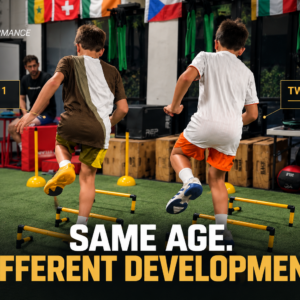
Even athletes of the same chronological age can differ significantly in biological maturation, coordination, strength, and training experience.
This is why effective strength and conditioning cannot be reduced to a standardized workout.
The process begins by asking questions.
What does the athlete need? What are their current physical capabilities? What are the demands of their sport? How much are they already training? What is their injury history? What are their short- and long-term goals?
The answers help us establish priorities.
Sometimes the athlete needs to develop maximal strength. Sometimes the focus should be on power, movement control, aerobic capacity, or the ability to tolerate repeated efforts.
And sometimes, the best decision is to reduce the training load rather than increase it.
Good coaching is not simply knowing what exercises to prescribe. It is knowing what problem we are trying to solve.
2. Assessment Gives Us Direction, Not All the Answers
Sports science has given coaches access to increasingly sophisticated tools for evaluating physical performance.
At Costa Performance, technologies such as VALD ForceDecks, Kinvent force plate systems, and Output Sports help us collect objective information about selected aspects of an athlete’s physical capabilities.
Depending on the assessment, we can examine variables related to force production, jump performance, movement velocity, strength, and other physical characteristics.
These measurements can be valuable when establishing baselines, monitoring changes, and identifying areas that deserve closer attention.
However, collecting data and understanding data are two very different things.
A countermovement jump result does not tell us everything about an athlete’s readiness. A difference between limbs does not automatically indicate an injury risk. And an improvement in one performance metric does not guarantee better results during competition.
Every measurement needs context.
We consider the athlete’s history, current training load, sport-specific demands, movement strategies, and the limitations of each test.
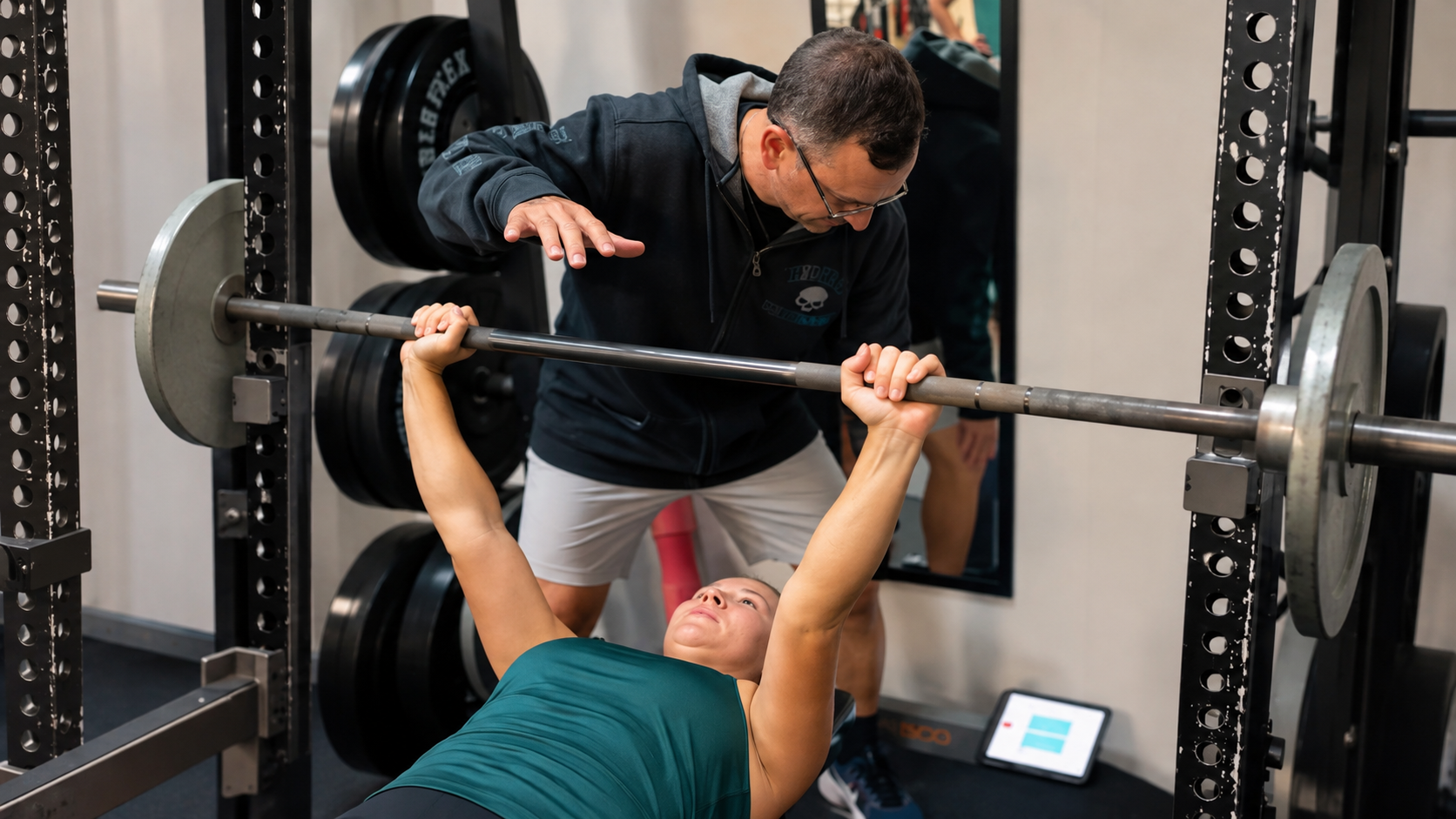
This is where the coach’s knowledge and judgment become essential.
Technology can provide information. Coaching determines how that information is used.
3. Individualization Is a Continuous Process
Individualized training is often presented as a selling point in the fitness industry.
But individualization is more than writing a different workout for each person.
It means continuously adjusting the training process according to how the athlete develops, responds, and adapts.
Consider a junior tennis player experiencing a rapid period of growth.
Changes in body proportions and biological maturation may temporarily influence coordination, movement strategies, and the way the athlete manages physical demands.
A program that worked well a few months earlier may need to be modified.
Now consider a professional athlete preparing for an important tournament.
Their priorities may shift from developing new physical capacities to maintaining strength and power while managing fatigue and recovery.
Both athletes need strength and conditioning, but the decisions behind their programs should be different.
At Costa Performance, we aim to connect the principles of exercise science with the individual athlete’s circumstances.
This requires observation, communication, reassessment, and the willingness to change direction when necessary.
The training plan should serve the athlete, not the other way around.
4. Training Is More Than Producing Movement
Sports performance is not determined by strength or speed in isolation.
Athletes must produce movement while responding to constantly changing information.
A tennis player accelerates toward a ball while anticipating its trajectory. A squash player adjusts body position in a confined space. A soccer player changes direction while monitoring teammates and opponents.
These situations involve the interaction of physical capacity, perception, decision-making, and motor coordination.
In the gym, we can develop many of the physical qualities that support these demands.
We can also introduce movement challenges involving reaction, balance, coordination, and adaptation.
However, the purpose is not to recreate every sporting situation inside the gym.
Sport-specific technical and perceptual skills are developed through practice in the sport itself.
Our role as performance coaches is to understand which physical capacities can be developed through strength and conditioning and how they may support the athlete’s overall preparation.
This distinction helps us avoid confusing exercises that look like a sport with exercises that actually address a physical training objective.
Training should have a purpose beyond looking athletic.
5. Communication Is Part of Performance Coaching
A coach may understand biomechanics, physiology, and training methodology extremely well.
But technical knowledge alone does not guarantee effective coaching.
The ability to communicate matters.
Athletes need to understand what they are doing, why they are doing it, and how the training process relates to their goals.
Younger athletes may need simpler instructions and more opportunities to explore movement. Experienced athletes may benefit from more detailed discussions about training objectives and performance data.
Parents may need help understanding why physical development takes time or why an athlete’s training should differ from that of a teammate.
Communication with technical coaches can also be valuable, particularly when balancing strength and conditioning with practice sessions, travel, and competition schedules.
Listening is equally important.
An athlete’s feedback about fatigue, discomfort, confidence, and perceived effort can provide information that objective measurements alone may not capture.
Great coaching involves knowing when to instruct, when to observe, when to ask questions, and when to listen.
6. What Makes a Great Performance Coach?
There is no single characteristic that defines an excellent coach.
A strong foundation in exercise science, biomechanics, physiology, and training methodology is important.
But knowledge must be accompanied by the ability to apply it.
A coach needs to recognize movement patterns, understand training progression, interpret information critically, and adapt exercises to the athlete in front of them.
Curiosity is another essential quality.
Sports science continues to evolve. New research challenges previous assumptions, technologies introduce new possibilities, and practical experience raises questions that deserve investigation.
A coach who believes there is nothing left to learn may eventually become limited by that belief.
We value professionals who are willing to question their own decisions, exchange ideas, and recognize that different athletes may require different solutions.
And perhaps most importantly, a coach needs to care about the person behind the performance.
Athletes are not simply collections of strength measurements, movement patterns, or competition results.
They are individuals with different motivations, experiences, expectations, and challenges.
Understanding that human dimension is an important part of helping them develop.
7. Building a Culture of Learning and Adaptation
At Costa Performance, our philosophy is closely connected to the idea that athletic development is an ongoing process of adaptation.
Training creates a stimulus. The athlete responds. We observe the response and adjust the process.
Coaching follows a similar principle.
Experience provides valuable lessons, but experience becomes more useful when combined with critical thinking and a willingness to keep learning.
We believe a strong performance environment should encourage coaches to exchange perspectives, discuss training decisions, learn from different sporting contexts, and remain open to new evidence.
This does not mean changing methods every time a new trend appears.
It means understanding the principles behind what we do and being willing to refine our approach when better information becomes available.
Our goal is to develop athletes through a thoughtful combination of scientific knowledge, practical experience, individualized programming, and meaningful human relationships.
That is the kind of coaching culture we want to continue building.
8. The Costa Performance Approach
Our work with junior, collegiate, professional, and recreational athletes is guided by a straightforward principle:
Understand the athlete. Assess what matters. Train with purpose. Monitor the response. Adapt when necessary.
This approach influences how we develop strength, speed, power, coordination, conditioning, and other physical capabilities across different sports.
It also shapes how we use performance assessment technology, communicate with athletes, and make decisions throughout the training process.
There is no perfect exercise that works for everyone.
There is no single assessment that explains everything.
And there is no training program that should remain unchanged regardless of how an athlete responds.
What matters is the quality of the process behind those decisions.
For athletes and families, understanding this approach can help clarify what to expect from a sports performance program.
For coaches, it represents a professional responsibility that goes well beyond supervising exercises.
9. Interested in Being Part of Costa Performance?
We are always interested in connecting with professionals who share our passion for sports performance, athletic development, and evidence-informed coaching.
We value technical knowledge, curiosity, communication skills, teamwork, and a genuine interest in helping athletes improve.
As Costa Performance continues to grow, we want to work with coaches who are motivated not only to apply what they already know, but also to continue developing their understanding of human movement and performance.
We are currently hiring a Performance Coach in Boca Raton, Florida.
If this approach to coaching resonates with you, we invite you to learn more about the opportunity through our LinkedIn job posting.
https://www.linkedin.com/jobs/view/4488897142
And if you are an athlete or parent looking for an individualized approach to sports performance training, we would be happy to introduce you to our work.
Costa Performance | Boca Raton, Florida
Strength & Conditioning | Sports Biomechanics | Athletic Development | Performance Assessments
Better decisions. Better training. Continuous adaptation.